If you’ve heard that CO2 refrigeration is coming, or you’ve already walked past a transcritical rack on a supermarket job and wondered what you were looking at, this is the guide to read. It covers what CO2 systems are, where they’re already running in Australia, what makes them genuinely different to work on, and how to get qualified.
Table of Contents
What Is CO2 (R744) Refrigeration?
CO2 refrigeration is one of the oldest refrigerant technologies we have, going back to commercial use in the late 1800s. It was phased out through the 20th century as synthetic gases became easier to work with. Now it’s back, and for reasons that go beyond environmental policy.
From an environmental standpoint, CO2 is about as good as a refrigerant gets: GWP of 1, no ozone depletion potential, non-flammable, non-toxic at normal concentrations. But the more immediate reason operators are moving to it is supply security. CO2 isn’t subject to the import quotas steadily squeezing availability and pushing up prices on the gases that have dominated commercial refrigeration for two decades. For large refrigeration asset owners, it’s a long-term bet against being held hostage by a shrinking import quota.
The technology has also caught up with Australia’s climate. Early CO2 systems struggled with efficiency in the high thirties. Modern systems run competitively across the country, including Queensland, where the heat was once considered a practical barrier.
How CO2 Behaves Differently
Every refrigerant has a critical point: a temperature and pressure above which it can no longer condense under conventional conditions. For most refrigerants, that point is well outside normal operating conditions. CO2’s critical point is 31.1°C and 73.8 bar, which is an average summer day in many parts of the country.
When the system crosses that threshold, CO2 can’t condense in a standard condenser. Instead, it rejects heat through a gas cooler as a supercritical fluid. That’s transcritical operation, and most Australian supermarket systems spend a significant part of the year there, especially in summer. Two things follow from this that every technician working on CO2 needs to understand: the high side runs at 80 to 120 bar on a hot day (versus around 25 to 28 bar on R410A), and the control system is actively managing gas cooler pressure as conditions shift, meaning an unexpected behaviour is as likely to be a controls issue as a mechanical one.
Why Australian Commercial and Industrial Applications Are Moving to CO2
The shift to CO2 in Australian commercial refrigeration has been happening for years, and it’s picking up pace.
With HFC import quotas tightening every two years through to 2036, the cost and availability of gases like R404A will keep deteriorating. No operator investing serious capital in a refrigeration asset today is going to design it around a gas with a built-in supply problem.
For example, all three of Australia’s largest supermarket operators have stated policies requiring natural refrigerant systems, primarily transcritical CO2, in new stores and major retrofits where practical. Woolworths has reported a 40% reduction in energy intensity from its CO2 systems compared to the R404A plant they replaced. Coles is targeting a 75% cut in combined Scope 1 and 2 emissions against a 2020 baseline, and refrigeration is one of the biggest levers they have to pull. Neither chain is treating this as a PR exercise.
Where You'll Encounter CO2 Systems in Australia
According to ATMOsphere’s Natural Refrigerants: State of the Industry reporting, the picture looks like this:
- Supermarkets: Around 400 Australian supermarkets were running transcritical CO2 systems by the end of 2025, representing roughly 8.5% of the total supermarket sector.
- Cold storage and distribution: Industrial CO2 installations in Australia grew 25% in 2025. Cold chain logistics, food wholesalers, and distribution centres are the main segment here, and it’s the fastest-growing part of the market.
- CO2 heat pumps: Coles has trialled combining refrigeration and space heating in a single system, replacing gas boilers. State rebate programs in New South Wales and Victoria have accelerated CO2 heat pump uptake in commercial buildings more broadly.
- Smaller commercial applications: CO2 condensing units for smaller-format stores and standalone cold rooms are a growing product category. Not every CO2 installation is a large supermarket rack with a dozen compressors on the roof.
For technicians based in Queensland, CO2 is present and growing, but the higher ambient temperatures mean some installations use hybrid configurations. The work is there, but the configurations may look a bit different to what you’d see in Melbourne, Sydney or Adelaide.
What's Different About Working With CO2
The high side of a transcritical CO2 system runs at pressures three to five times higher than R410A. That means every pipe, fitting, and pressure vessel needs to be rated specifically for CO2 pressures.
If the pressure in a CO2 system drops below 5.2 bar, the refrigerant can solidify inside the system. Dry ice blocks refrigerant flow, damages components, and turns a routine service job into something much more complicated.
CO2 being non-flammable and non-toxic sometimes leads people to underestimate the risk. But CO2 is heavier than air, and in an enclosed plant room or poorly ventilated space, a significant leak can displace enough oxygen to cause incapacitation before you'd have any sensory warning.
The control systems on a transcritical CO2 rack are more sophisticated than what you'd find on a conventional HFC system. You don't need to be a controls engineer, but you do need to understand what the system is trying to do.
CO2 has no smell. The detection methods that work for other refrigerants don't apply. Dedicated electronic CO2 detectors are the only reliable approach.
The Pathway Into CO2 Work
The good news is that getting into CO2 work doesn’t mean starting over. It builds on what you already have.
If you're already working in RAC, you've likely got this sorted. If you're coming from an electrical background and looking to add refrigeration to your scope, UEE32225 Certificate III in Air Conditioning and Refrigeration is the qualification that leads to an ARCtick refrigerant handling licence.
This is the nationally accredited unit that covers the safety and legal requirements specific to CO2 work as well as specific training on servicing and repairing CO2 systems. It's the formally recognised step into CO2, filling the knowledge gaps that are specific to working with this natural refrigerant.
What UEERA0006 and UEERA0066 covers:
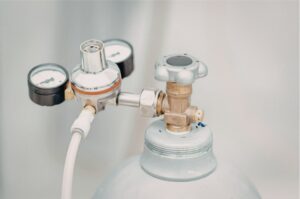
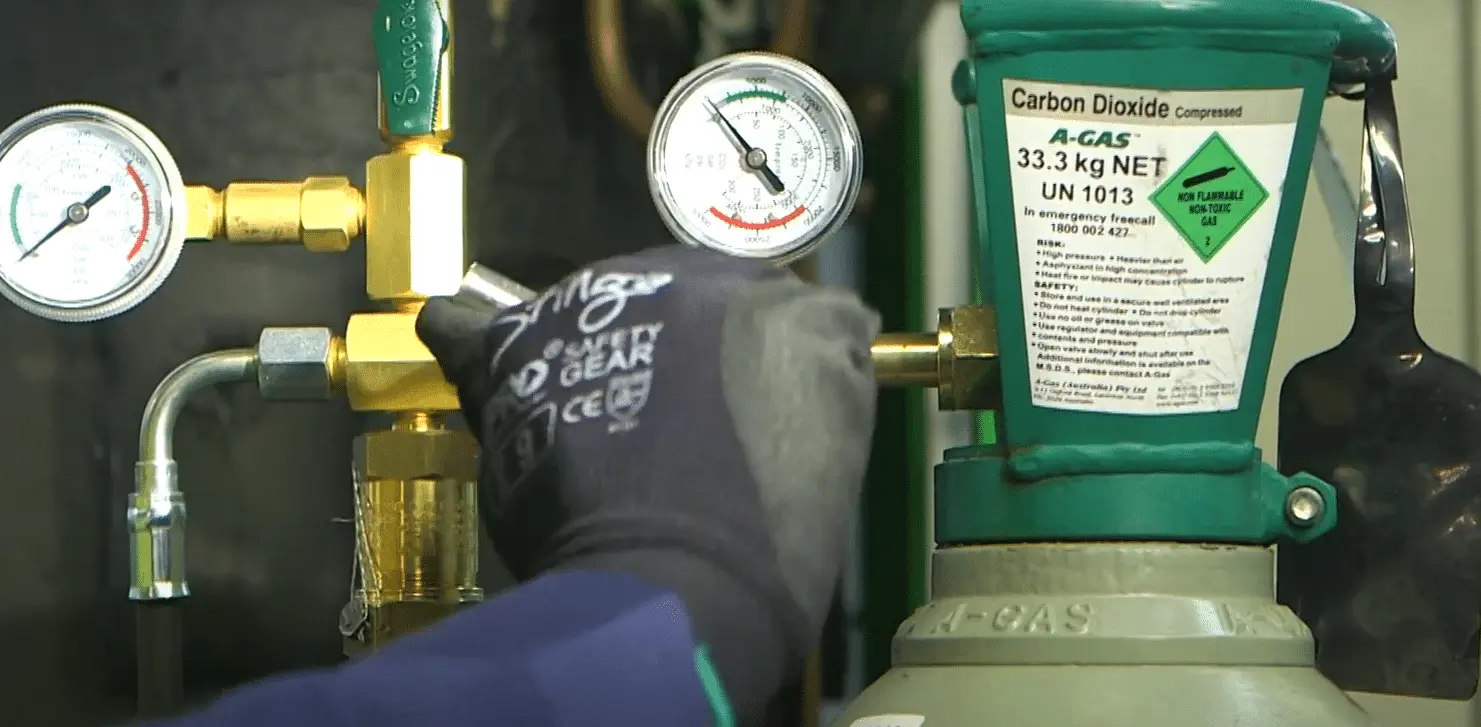
- CO2 cylinder handling and storage
- CO2 refrigerant properties, including the critical point, pressure behaviour, and dry ice risk
- Emergency procedures and incident management
- WHS and OHS legislative requirements for CO2 work
- Workplace documentation — safety data sheets (SDS), safe work method statements (SWMS), Hazchem codes
- Relevant standards, codes, and manufacturer requirements
- Prepare to service CO² refrigeration system
- Service and repair CO² refrigeration system
- Complete work and report on servicing CO² refrigeration system
Here at Get Skilled, we deliver UEERA0006 and UEERA0066 with online theory that you can work through at your own pace, which makes it manageable for technicians who can’t easily pull days off a busy job list.
Career Opportunities for CO2-Qualified Technicians
CO2 refrigeration skills are scarce in Australia, but the work is there, and the people who can do it aren’t keeping up.
Supermarket Refrigeration
The largest and most immediate market. Installing, commissioning, and servicing transcritical CO2 racks is specialist work, and it’s priced accordingly. The major contractors servicing Coles, Woolworths, and Aldi are actively building their CO2 capability, which means qualified technicians have real leverage.
Cold Chain and Industrial Refrigeration
Cold storage facilities, food wholesalers, and distribution centres represent the next wave of CO2 adoption in Australia. Industrial systems are more complex than supermarket racks and the skill bar is higher.
CO2 Heat Pumps
As commercial operators move to replace gas boilers and integrate refrigeration with space heating and hot water in a single system, CO2 heat pump work is becoming its own specialisation, particularly in southern states where state rebate programs are active.
Major contractors are already sending existing staff through CO2 training as rollouts accelerate. Getting qualified now means you’re the person they call on, not the person they’re waiting to put through a course.
Ready to Qualify for CO2 Refrigeration Work?
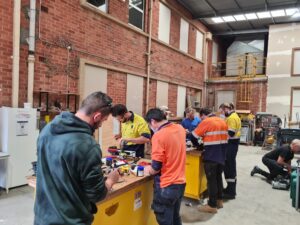
CO2 refrigeration is where a significant share of Australian commercial refrigeration work is heading, and the technicians who are qualified to work on these systems are in short supply. That gap is an opportunity, and Get Skilled Training delivers UEERA0006 — Apply Safety Awareness and Legal Requirements for Carbon Dioxide Refrigerant and UEERA0066 Repair and service carbon dioxide refrigeration systems. Study the theory at your own pace, attend our training facility over 2 days and complete the training and assessment, and receive your Statement of Attainment.
Enrol today, or contact our team directly if you want to talk through which training pathway makes sense for where you are in your career.
Frequently Asked Questions
No. CO2 isn't covered by the ARCtick licensing scheme at all. It's a natural refrigerant, not a synthetic greenhouse gas, so the ARCtick framework doesn't apply to it. What you need is UEERA0006 and UEERA0066, which cover the specific WHS and legal obligations that come with working in environments where CO2 refrigerant is present, along with how to safely and competently undertake service and repair work on a CO2 System.
It used to look that way, but not anymore. CO2 condensing units for smaller cold rooms and standalone applications are a growing product category, and CO2 heat pumps are going into mid-size commercial buildings. The entry point for CO2 work is lower than it was a few years ago, and it's coming down further.
The risk is manageable, but it needs to be taken seriously. CO2 is non-flammable and non-toxic, but in an enclosed space, a significant leak can displace enough oxygen to cause incapacitation before you'd have any sensory warning. That's why CO2 monitoring, ventilation requirements, and emergency procedures are central to working safely with these systems and sit at the core of the UEERA0006 and UEERA0066 training.
Get Skilled delivers UEERA0006 and UEERA0066 over a two day practical course in Brisbane with a 10 hour online training and assessment component. You can work through it around your existing schedule, whether that's a few evenings or a couple of solid study sessions and choose a date for the practical that works with your schedule.