Ask around the trade about hydrocarbon refrigerants and you’ll get various opinions: some say they’re too dangerous to touch, others say the concern is overblown. The truth sits in the middle, and it’s more useful than either extreme.
Hydrocarbon refrigerants are flammable, which is a real hazard that needs to be managed, not talked around. But managed correctly, with the right training, tools, and work practices, these refrigerants are safe to work with. The industry has been using R600a in domestic fridges for decades without incident. What’s changing is that hydrocarbons are moving into air conditioning and commercial refrigeration at scale, which means working techs need to understand them properly.
Table of Contents
What Are Hydrocarbon Refrigerants?
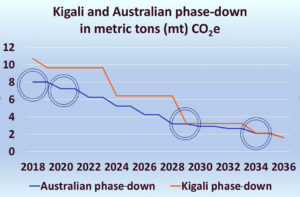
R290 is propane, R600a is isobutane, R1270 is propylene. All three are natural refrigerants with a GWP effectively at zero, well below the HFC import quotas tightening every two years. They’re not subject to quota restrictions at all, which is part of why operators are increasingly interested in them.
The performance case is solid, particularly in self-contained commercial refrigeration. R290 has excellent thermodynamic properties and major manufacturers have been specifying it in display cabinets and commercial cold-chain equipment for years. The flammability is the constraint, specifically the charge limits and work practices that flow from the A3 safety classification.
What A3 Actually Means
A3 means high flammability. The minimum ignition energy for R290 and R600a is low enough that a standard electrical spark from a light switch or relay can ignite it. If R290 leaks, it sinks to the floor and collects in low points. If the concentration builds up enough and there’s an ignition source nearby, it can ignite.
Australian charge limits under AS/NZS 5149 and AS/NZS 60335 are specifically calculated so that a worst-case complete refrigerant release stays below ignitable concentrations in the relevant space. With a compliant installation, properly charged, in an appropriately sized and ventilated space, the risk is controlled. Incidents occur when one of those conditions isn’t met.
Charge Size Limits
Charge limits are the foundation of hydrocarbon safety in Australian installations. The relevant standards are AS/NZS 5149 for commercial and industrial refrigeration, and AS/NZS 60335.2.40 for air conditioners. For commercial self-contained cabinets, AS/NZS 60335.2.89:2020 now allows up to approximately 500 grams of A3 refrigerant per circuit in compliant equipment — up from the previous 150-gram limit.
| Refrigerant | Class | GWP | Common application | Charge limit |
|---|---|---|---|---|
| R290 (propane) | A3 | ~3 | Commercial cabinets, light commercial refrigeration | Up to ~500 g per circuit (compliant design) |
| R600a (isobutane) | A3 | ~3 | Domestic refrigerators, small commercial units | Up to ~500 g per circuit (compliant design) |
| R1270 (propylene) | A3 | ~3 | Some commercial refrigeration | Up to ~500 g per circuit (compliant design) |
For split system air conditioners, the charge calculation is room-size dependent — approximately 334 grams of R290 in a standard 20m² room at current Australian standards. An IEC proposal to increase this for systems with additional safety measures is not yet adopted in Australia as of mid-2026.
One thing you can’t do is retrofit an existing HFC system with a hydrocarbon substitute. The system hasn’t been designed or tested for flammability, the electrical components haven’t been assessed for ignition risk, and the charge hasn’t been evaluated against the space. This is explicitly prohibited under AS/NZS 5149.4 and the ARC Refrigerant Handling Code of Practice.
What Changes in Your Work Practices
If your background is HFC refrigerants, hydrocarbon work will feel different in four key areas.
| Practice | HFC refrigerants | Hydrocarbon refrigerants (A3) |
|---|---|---|
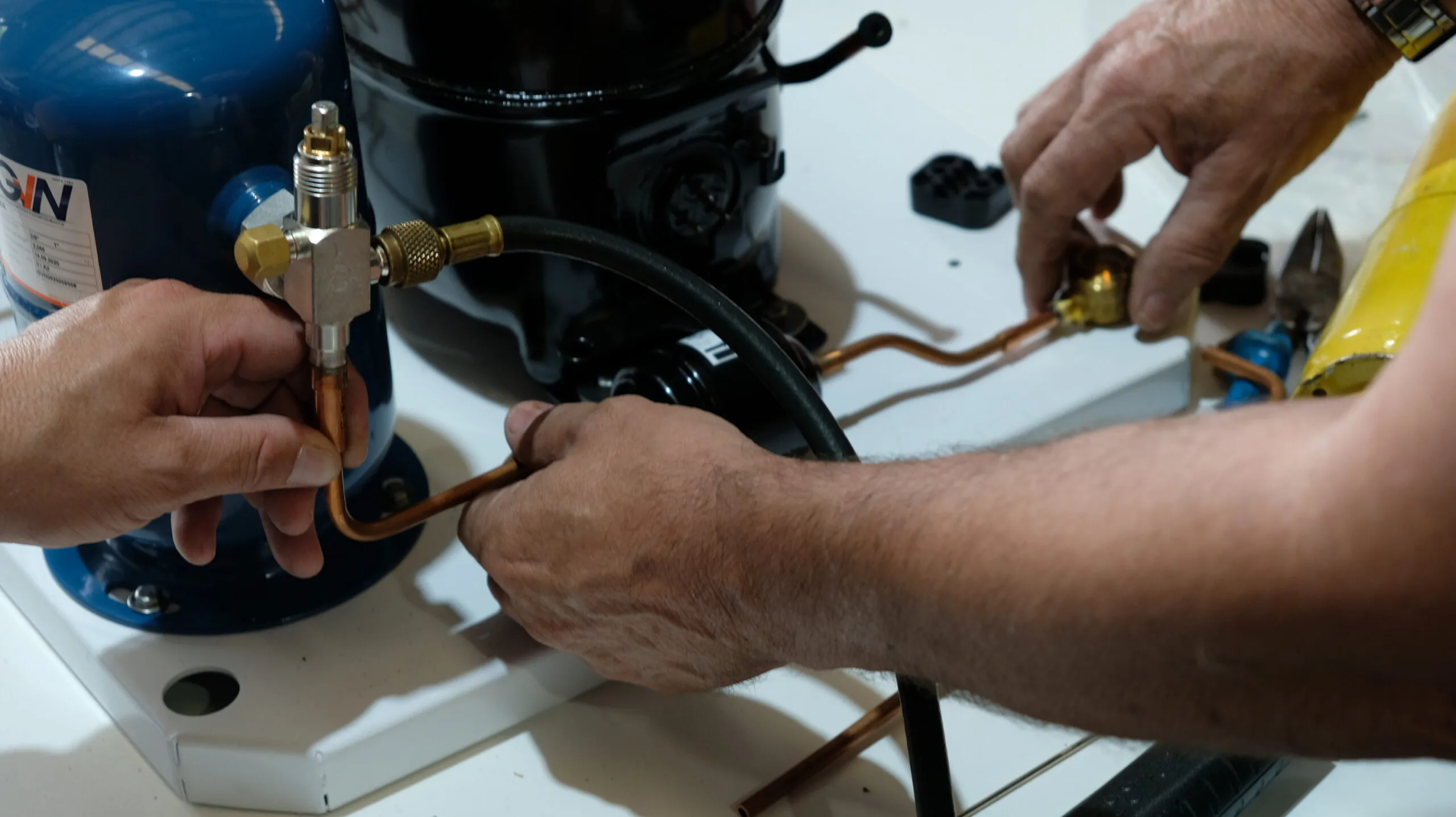
| Brazing on active systems | Standard practice | Not permitted — full recovery required first |
| Leak detection | Standard HFC electronic detector | Combustible gas/hydrocarbon-specific detector required |
| Charging | By pressure and superheat | By weight only. Overcharging is a safety issue |
| Ignition source control | Good practice | Mandatory. Full work area assessment before opening system |
| Recovery equipment | Standard fluorocarbon equipment | Dedicated hydrocarbon-rated equipment required |
The brazing and ignition source points are where people get caught. No naked flames near an open hydrocarbon system, full stop.
Before opening any hydrocarbon-charged system, ventilate the space, confirm the area is clear with a calibrated flammable gas detector, and identify every potential ignition source in the work area.
Training and Licensing
Your ARCtick licence covers fluorocarbon refrigerants, however, it does not cover hydrocarbons.
In Queensland, hydrocarbon refrigerants fall under the Petroleum and Gas (Production and Safety) Act 2004, meaning anyone doing gas work on hydrocarbon refrigeration systems needs a Gas Work Licence (Hydrocarbon Refrigeration), a separate licensing requirement on top of ARCtick and electrical licensing. South Australia has its own framework. Check state-specific requirements before taking on hydrocarbon work anywhere in Australia.
Get Skilled Training delivers the Hydrocarbon Course Licence in Brisbane and Adelaide for qualified RAC technicians holding a current ARCtick licence (RAC01 or RDR04) and a restricted electrical licence. The course covers the units of competency required to apply for the Queensland Gas Work Licence (Hydrocarbon Refrigeration), and covers the South Australian requirements in the Adelaide delivery. CITB funding is available for eligible SA residents.
Units covered include UEECD0007, UEERA0007, UEERA0084, and UEERA0053 or UEERA0089 depending on your current ARC licence. On completion, you receive a Statement of Attainment for the required units.
Ready to Add Hydrocarbon Work to Your Licence?
Hydrocarbon refrigerant work is a genuine specialisation, and getting qualified now means you can take on this work safely, compliantly, and confidently.
Enrol in our Hydrocarbon Course Licence, or call 1300 856 832 to confirm prerequisites and whether the course is right for where you are.
Frequently Asked Questions
No. ARCtick doesn't cover hydrocarbons at all. What you need is state-level licensing for hydrocarbon gas work, plus the relevant training. In Queensland that's the Gas Work Licence (Hydrocarbon Refrigeration).
No. HFC detectors work on halogenated gas signatures. You need a combustible gas detector or one specifically calibrated for the refrigerant you're working with.
No. Retrofitting a non-flammable refrigerant system with A3 hydrocarbon is prohibited under AS/NZS 5149.4 and the ARC Code of Practice.
No. R290 can be used in split systems where equipment is specifically designed and certified for A3 refrigerants and installation complies with the relevant standards. R32 has taken most of the residential split market because it avoids the A3 licensing requirements, not because R290 is prohibited.